
What Should I Do With My Hands? Start With What You’re Trying to Say (Copy)
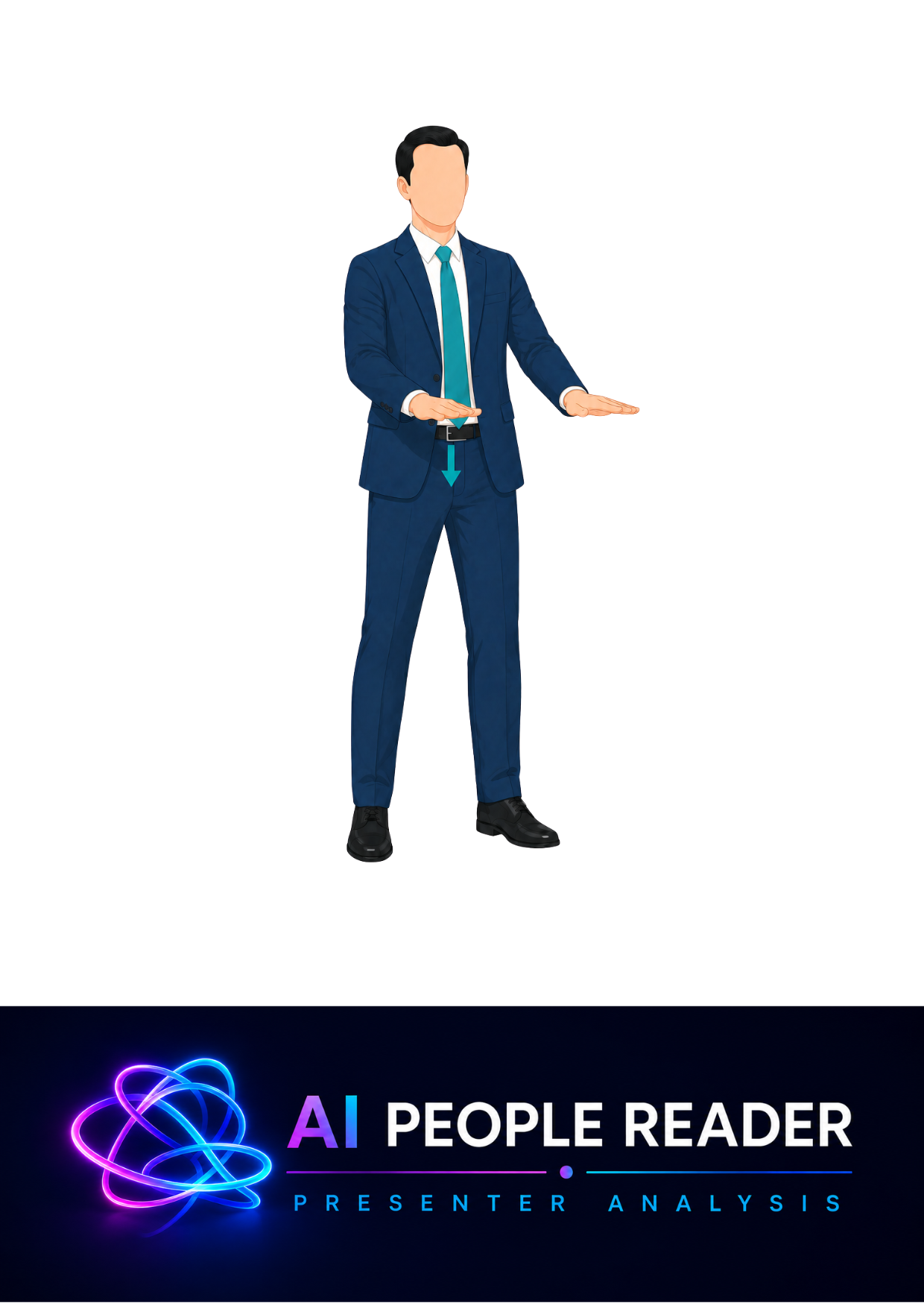
Palms down: a relatively contained, controlled gesture. It gives us the smaller end of the movement vocabulary.

Arms extended/open: immediately contrasts with #1. The reader can see how much more space the hands and arms can occupy.
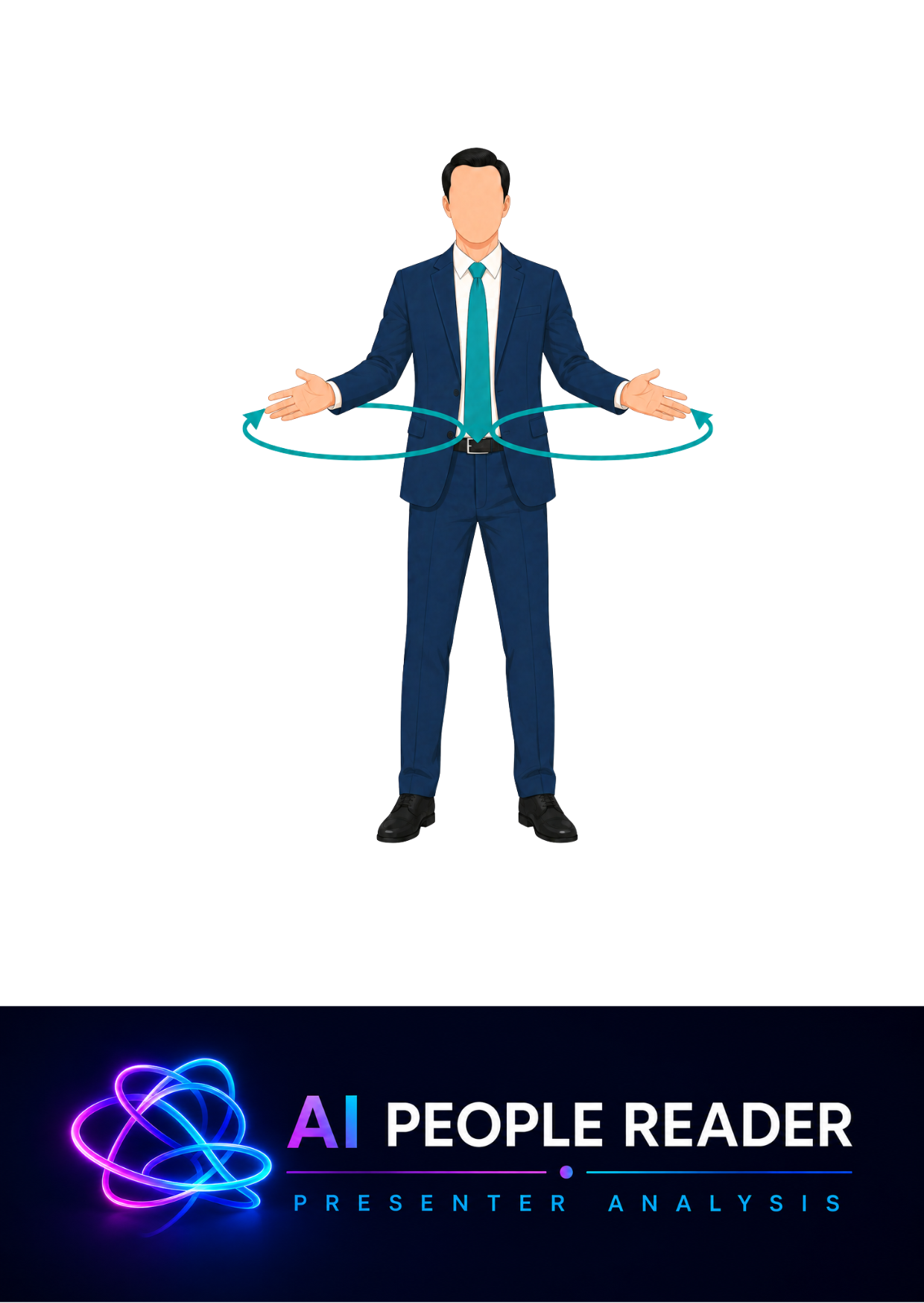
Circular spreading movement: definitely include this one. It demonstrates that gesture isn't only about the shape of the hands; there's also a pathway of movement. That's particularly relevant to what we're explaining.
“Your hands have a vocabulary.”
One of the most common things I hear when working with people on presentation skills is:
“I don’t know what to do with my hands.”
Many people are already aware that they use the same hand gestures repeatedly. They may bring their hands together in the same way, make the same movement every time they emphasise something, or simply repeat one familiar gesture throughout an entire presentation.
What often surprises them is discovering just how many different possibilities there are.
Your hands have a vocabulary
We all have movement patterns, and the way we use our hands forms part of how we naturally move. But introducing someone to different hand shapes and gestures is not about trying to change their underlying movement pattern.
I think of it more as giving them additional tools to express themselves.
For many years, one of the exercises I used in my presentation classes was very simple. I would ask students to watch their classmates presenting and pay particular attention to their hand gestures.
What did somebody else do that they themselves never did?
Could they experiment with that movement?
Could they incorporate a different hand gesture into their own presentation?
The objective was never to copy another person's presentation style. It was simply to make students aware that there were movement possibilities available to them that they hadn't considered.
I now use cards showing different hand shapes, gestures and reaches in class, which makes those possibilities much easier for students to see and experiment with.
But learning more hand gestures is only part of the story.
A gesture doesn't communicate in isolation
It is tempting to look at a hand gesture and assign a meaning to it.
This gesture looks confident.
That gesture looks nervous.
This is a powerful gesture.
That is a weak one.
Human movement doesn't work quite so neatly.
From my work in movement analysis and Body Code Profiling, I have found that people have patterns in the way they combine their gestures with different qualities of movement, or what we refer to in Laban Movement Analysis as Effort.
Weight Effort, for example, can range between Strong and Light.
A repetitive hand gesture combined with Strong Weight can eventually become distracting and may even appear forceful.
The same kind of repetition combined with Light Weight can create a very different impression. The speaker may appear unsure, weak or simply less engaging, and the movement can reduce the impact of what is being said.
This is why telling someone simply to “stop repeating that gesture” doesn't necessarily solve the communication problem.
We need to look at the movement in relation to the message.
When the movement tells a different story
One of my favourite exercises in class involves a video of a German student I once taught.
I play his presentation to the class with the sound turned off and ask everyone:
“What do you think he is talking about?”
The answer is remarkably consistent.
Something serious.
His movements are strong enough that, without hearing his words, people assume the subject matter must be important or serious.
Then I turn the sound back on.
He is simply telling a story about his brother.
It usually gets a laugh, but it demonstrates something important: the movement and the message are telling two different stories.
I have seen the same issue with younger presenters. One teenager I worked with had extremely strong, repetitive hand gestures. It didn't matter what he was talking about — the same strength appeared again and again.
The problem wasn't that he was “using his hands too much.”
The problem was that his movement didn't change when his communication intention changed.
Start with the content, not the hands
This is why, when somebody asks me what they should do with their hands, I don't start with the hands.
I start with the content.
What are you trying to communicate?
Does this particular part of the presentation need emphasis?
Are you trying to convince somebody of something?
Or are you simply sharing information or telling a casual story?
Not every sentence deserves the same physical emphasis.
If you are sharing a simple piece of information, strong movement may overpower it. If you are making an important argument and your movement remains consistently light, your physical communication may not provide enough support for what you're saying.
The goal isn't to find the “correct” gesture.
It is to develop enough movement awareness and vocabulary that you have choices — and can use those choices in a way that supports your intention.
Movement is in the body, not in the head
This is also why I don't believe people can improve their presentation movement simply by understanding it intellectually.
In my classes, I use a process that may seem quite traditional.
First, I ask participants to sit down and write their script. They need to know what they want to say before they can explore how they want to communicate it.
Then I ask them to get up.
I often remind them:
“Movement is in the body, not in the head.”
You have to physically practise.
Participants work in pairs. I give them time and deliberately ask them not to rush. Once they are comfortable with their script, they take turns presenting to their partner while recording themselves.
Then they watch.
They can try again.
And again.
They can change something, record themselves and see what actually happened rather than relying on what they thought they were doing.
Only when they feel confident do I ask them to present in front of the class.
This process matters because changing the way we present isn't simply a matter of knowing what we should do. The body needs the opportunity to experience different possibilities.
So, what should you do with your hands?
The next time you rehearse a presentation, don't begin by asking:
“What should I do with my hands?”
Instead, ask:
“What am I trying to say here, and does my movement support it?”
Record yourself. Watch your presentation with the sound turned off. What does your movement appear to be saying?
Then turn the sound back on.
Do the two messages match?
Your hands don't need to perform for your audience. They don't need to follow a prescribed collection of “good presentation gestures.”
They simply need more possibilities — and you need enough awareness to choose movements that support what you actually want to say.
Because effective movement isn't about using more gestures. It's about making your movement and your message speak the same language.