
Voice Is Movement: Understanding How We Move When We Communicate
When we think about improving our voice for a presentation, we often focus on volume, tone, pace and pronunciation. We may be encouraged to speak more slowly, project our voice or introduce pauses to emphasise important points.
But have you ever considered that your voice is also a product of movement?
Every word we speak involves movement within our body. Our breathing, vocal folds, tongue, lips and jaw all work together to produce sound.
Yet the connection between how we move and how we speak is something we rarely consider when preparing for a presentation.
As a movement analyst and presentation skills trainer, I approach communication from a slightly different perspective.
I'm not teaching people how to use their voice. I'm helping them understand how they move when they communicate.
And this includes understanding how movement can influence the way we express ourselves when speaking.
Our Voice Begins with Movement
Our voice does not function independently of our body.
When we speak, air from our lungs passes through our vocal folds, causing them to vibrate and produce sound. The movement of our tongue, lips and jaw then helps shape that sound into speech.
Our breathing, posture and muscular tension can also influence how comfortably and effectively we produce our voice.
In other words, voice production involves a complex coordination of movements within our body.
But movement is not limited to the physical mechanisms that produce sound.
When we communicate, our entire body is involved. We shift our weight, change our posture, move our hands and adjust our position in relation to the people around us.
These movements contribute to how our message is expressed and how we are perceived by others.
This is where my work with Laban Movement Analysis comes in.
Understanding Movement Through Effort
Laban Movement Analysis (LMA) provides a framework for observing and understanding human movement.
One of its key components is Effort, which describes the dynamic qualities of movement through four factors: Space, Weight, Time and Flow.
These factors help us understand not simply what movement someone performs, but how they perform it.
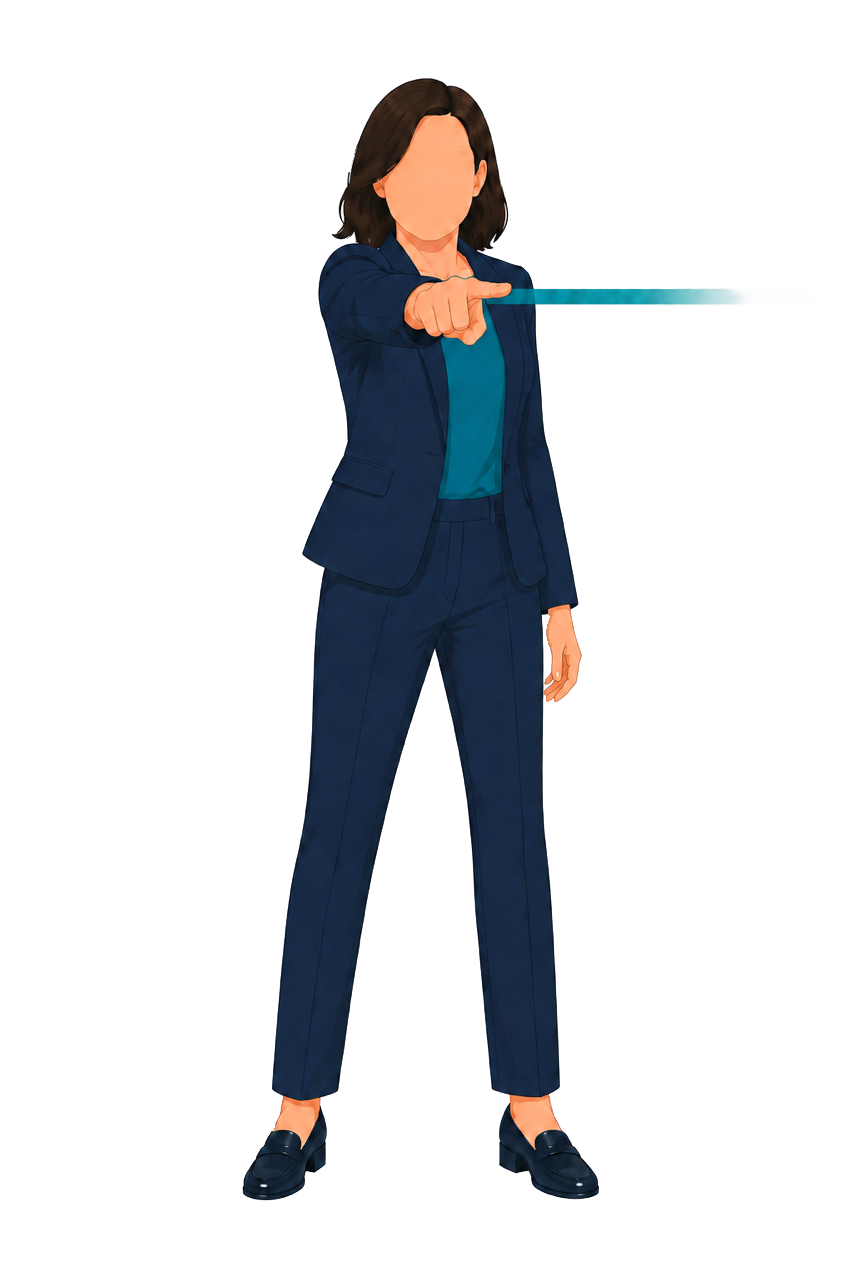
For example, consider two different Effort Actions: Punching and Gliding.
Punching involves Direct Space, Strong Weight and Sudden Time. It has a forceful, definite quality, with a clear moment of emphasis.
Gliding, on the other hand, involves Direct Space, Light Weight and Sustained Time. It has a lighter, more continuous quality that unfolds over time.
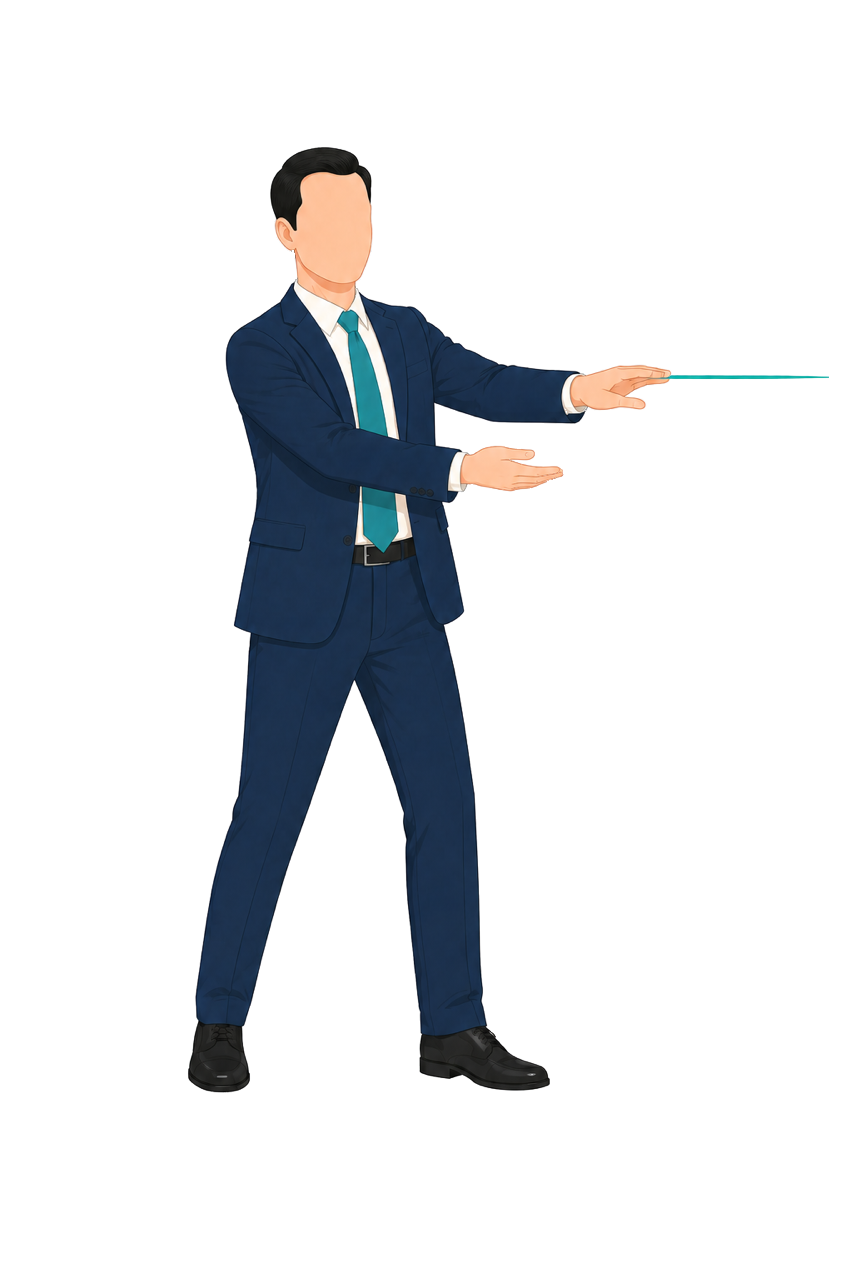
Although both actions use Direct Space, their Weight and Time qualities are very different.
Imagine someone using a strong, sudden hand gesture to emphasise a point during a presentation. Now imagine that same person introducing a lighter, more sustained movement.
The message being delivered may remain exactly the same, but the way the movement is expressed has changed.
This is why I do not simply teach people which hand gestures to use when presenting.
I help them become aware of their natural movement patterns and explore different Effort qualities that may support the way they wish to communicate.
Movement Phrasing: How Our Movements Unfold Over Time
Another important aspect of my work is Phrasing.
In movement analysis, Phrasing describes how movement is organised and expressed over time.
Some movements build gradually towards a point of emphasis. Others unfold more continuously, while some have sudden or clearly defined endings.
We can observe these qualities in the way people stand, walk, shift their weight and use their hands when communicating.
We can also explore how movement Phrasing relates to the rhythm and structure of speech.
Consider how someone delivers a sentence.
They may speak continuously, allowing one thought to flow into another. Alternatively, they may introduce a clear ending, pause briefly and then begin their next sentence.
The words themselves may be identical, but the rhythm and emphasis of the delivery can create a different impression.
This does not mean that a particular hand gesture automatically changes someone's vocal quality.
Rather, by exploring different Effort qualities and movement Phrasing, we can help individuals become more aware of how they express themselves physically and how these qualities relate to their overall communication.
Bringing Movement and Speech Together
During my recent presentation workshops, I had the opportunity to explore these principles with participants who had different natural movement patterns.
One participant tended to use Impacting Phrasing, which contributed to a presentation style that came across as rather definite.
Instead of asking the participant to change their voice or verbal content, I introduced a different movement quality through Gliding.
By incorporating lighter, more sustained movements into their hand gestures, the participant was able to explore a different dynamic quality of expression.
The change in movement was immediately visible.
The purpose was not to eliminate the participant's natural movement style, but to introduce an alternative that could be used when a more flexible approach to communication was appropriate.
In another workshop, I worked with a participant who naturally used Swing Phrasing.
In this case, I introduced the qualities of Impacting Phrasing to explore clearer endings and moments of emphasis.
I asked the participant to write a short script and place a slash after the full stop at the end of each sentence.
The slash served as a visual reminder to bring each sentence to a definite end, followed by a short pause before continuing with the next.
This simple exercise provided an opportunity to explore a different quality of Phrasing and bring greater clarity to the structure and delivery of the speech.
These two examples illustrate an important principle in my approach to presentation development.
There is no single movement pattern that everyone should adopt when presenting.
We all have our own natural movement patterns. The objective is not to replace them with someone else's style, but to develop greater awareness and flexibility in how we communicate.
Why Movement Awareness Matters in Presentation
Many people prepare for presentations by writing their scripts, developing their slides and rehearsing what they intend to say.
However, very few have the opportunity to observe and understand how they actually move when communicating.
Some may use repetitive gestures without realising it. Others may find that their physical movements do not support the emphasis or intention of their message.
This is why movement awareness is an important part of my work.
By understanding our natural movement patterns, we can begin to recognise which qualities support our communication and which may need to be adjusted for a particular situation.
The objective is not to make everyone move or present in the same way.
It is to help individuals expand their movement repertoire so they have greater flexibility in how they express themselves.
When working with Effort and Phrasing, even a small adjustment in movement can create an immediately visible difference in the way someone presents.
And because communication involves both physical and vocal expression, it is worth considering how these elements work together rather than treating them as entirely separate.
Your Body Is Part of Your Voice
Voice is produced through movement, but the relationship between movement and communication extends far beyond the physical production of sound.
The way we stand, shift our weight, move our hands and organise our movements over time contributes to how we express ourselves and how others perceive us.
Understanding these patterns gives us an opportunity to explore different ways of communicating while remaining true to our natural movement tendencies.
So, the next time you prepare for a presentation, don't just focus on your slides or the words you intend to say.
Take a moment to consider how your body moves when you communicate.
Because every movement influences how you're received.