
Why changing the way you move begins by giving your body more choices
One of the most common reactions I hear when I ask someone to try a different way of moving is:
“But this feels unnatural.”
My response is usually quite simple:
Change always feels unnatural at first. But doing the same things brings the same results.
When we present, most of us rely on movement patterns that have become familiar over time. We may stand in a particular way, use certain gestures repeatedly or move within a relatively limited range without even realising it.
The challenge comes when those familiar movement patterns don't support what we are trying to communicate.
Seeing the Difference Comes First
Before asking someone to change the way they move, I want them to understand why they might want to change it.
For example, I may show participants two videos. In one, the presenter uses more Spreading, opening the front of the body towards the audience. In the other, the presenter tends to close off the front of the body.
Rather than telling participants what they should see, I ask them:
“Which presenter appears more friendly and approachable to you?”
They can see the difference for themselves.
Then I ask them to try it.
And this is often where I hear:
“It doesn't feel natural.”
Of course it doesn't.
If your body has been moving in a particular way for years, asking it to suddenly do something different is going to feel unfamiliar.
But unfamiliar does not necessarily mean unnatural.
Sometimes it simply means you haven't practised moving that way yet.
Movement Is in the Body, Not in the Head
This is something I say repeatedly in my classes:
Movement is in the body, not in the head.
Simply knowing what you want to change is not enough. The body needs the experience of doing something differently.
You may understand intellectually that you want to open your body more, change your stance or use a different quality of movement. But understanding the change and being able to make that change comfortably are two very different things.
This is why we practise.
Recently, I worked with a gentleman from The Mall Group. We recorded around ten clips of him saying essentially the same thing while experimenting with different ways of moving.
He would present. We would watch the video. He would make an adjustment. Then we would record again.
And again.
And again.
By the final clip, he could compare himself with his first recording and see the change.
His reaction was:
“I'm really happy with this one. I feel more comfortable and confident.”
That moment was important because I wasn't telling him that he had changed.
He could see it and feel it for himself.
Practice makes perfect, as I often tell my participants.
But “perfect” doesn't mean there is one perfect way to move when you present. The aim isn't necessarily to get rid of the movement patterns you already have. It is to expand your movement repertoire, so you have more choices available when communicating.
Why I Tell People to Dance
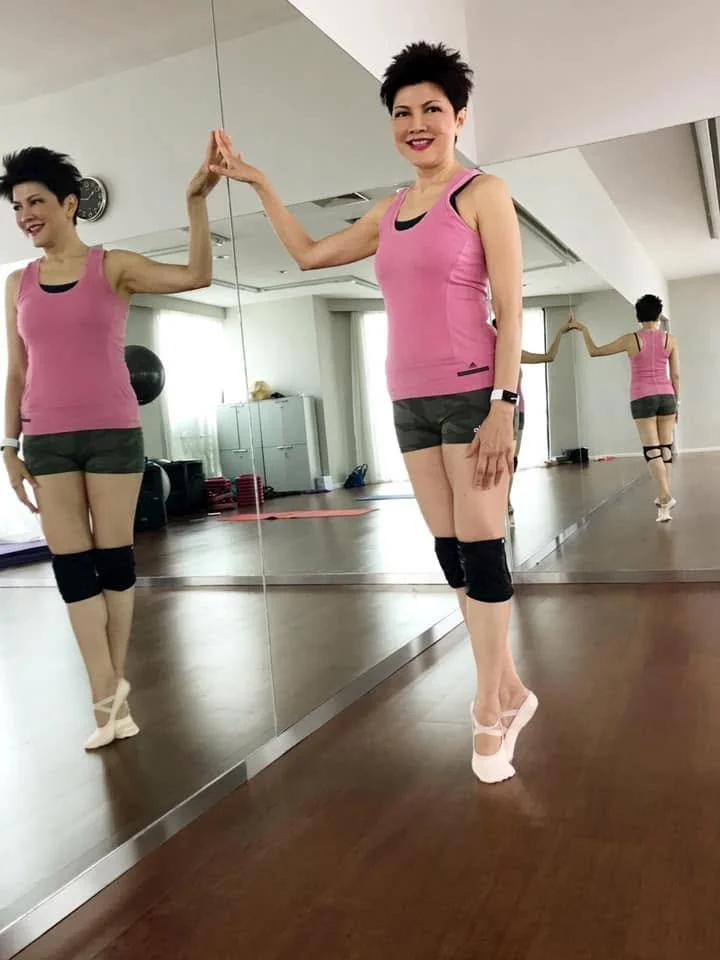
People sometimes ask me what they can do to change their movement patterns.
One of my answers often surprises them:
Take up dancing.
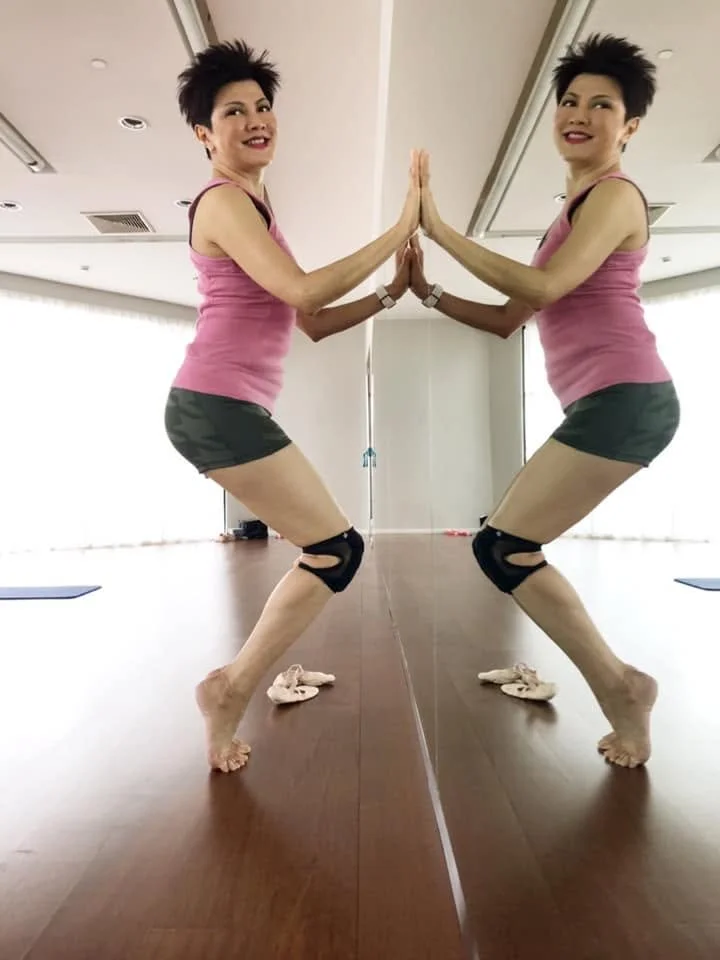
I don't mean that everyone needs to become a dancer. And I don't mean that dancing automatically makes you a better presenter.
I recommend it because dancing takes us outside our normal movement comfort zone.
Think about how you move during an ordinary day. Much of it is familiar. We walk, sit, stand, reach for things and gesture in ways our bodies already know.
Dancing asks us to do something different.
It gives us opportunities to experience different rhythms, directions, weight shifts, ways of using space and combinations of movement that may rarely appear in our everyday lives.
For me, that is its value.
It gives the body an opportunity to experience movement it might never otherwise explore.
I have also noticed something interesting in my classes. Participants who have experience in dance or other movement disciplines often understand concepts such as Effort, Shape and Space more readily. They also tend to be more daring and less shy about experimenting with unfamiliar ways of moving.
They are more willing to try.
And trying is where change begins.
I Had to Learn This Myself
I don't recommend dancing simply as a theoretical idea.
When I began studying movement, I took up ballet.
I was 48 years old at the time.
In many ways, ballet suited me perfectly. I am naturally very disciplined and structured—sometimes to the point where I can become inflexible.
Ballet gave me structure, rules and precision.
After about six months, however, my private dance instructor suggested that I try contemporary dance. She felt that rather than continuing within ballet's strict structure, I would benefit from something that gave me more freedom to explore.
She was right.
Contemporary dance took me outside my own movement comfort zone. Instead of relying so heavily on structure, I had to experiment with ways of moving that were unfamiliar to me.
What surprised me was that the experience went beyond movement.
It made me realise how important it is to step outside what is familiar, explore different possibilities and take in new perspectives.
Sometimes the movement that feels most “natural” to us may simply be the movement we know best.
What We Often Call “Muscle Memory”
There is a useful principle from motor learning behind this.
We often use the expression “muscle memory” when a physical action becomes easier through practice. Technically, however, the memory isn't stored in the muscles themselves. Learning movement involves the brain and nervous system.
Research into motor learning has shown that repeated physical practice is associated with changes in the neural systems involved in planning and controlling movement. As movement becomes more familiar through practice, performing it can require less conscious attention.
We don't need to understand the neuroscience every time we move. But the principle is useful:
Thinking about moving differently and physically practising moving differently are not the same thing.
The body needs the experience.
This is also why I don't want participants simply memorising a new gesture or replacing one habitual movement with another.
I want them to explore movement.
More Movement Choices, Not a New You
Expanding your movement repertoire isn't about changing who you are.
And it isn't necessarily about eliminating the movement patterns you already have.
Those movements may be extremely useful in another situation.
Someone who frequently uses Strong Weight, for example, may find that quality useful when they need to be decisive or assertive. Someone who frequently Encloses does not need to eliminate Enclosing from the way they move.
The more useful question is:
What other movement choices are available to you?
If one movement pattern is always your automatic response, your options are limited.
But if you can Spread as well as Enclose, move strongly as well as lightly, move directly as well as indirectly, or change the way you use space according to what you are trying to communicate, you have a much richer movement repertoire available to you.
You haven't become somebody else.
You've simply given your body more possibilities.
Step Outside Your Movement Comfort Zone
So the next time you try a different way of moving and immediately think:
“This isn't me. It feels unnatural.”
Don't dismiss it quite so quickly.
It may simply be unfamiliar.
Try it again.
Watch yourself.
Experiment with it.
Give your body the experience of doing something different.
Because changing movement isn't simply about understanding what you should do differently.
Your body has to experience the difference.
And if you're wondering where to begin?
You could always try dancing. 💃